District Wellness Policy
At Easthampton Public Schools, we believe wellness is foundational to learning, belonging, and long-term success. A Local Wellness Policy is not simply a compliance requirement—it is a reflection of our values and our shared responsibility to educate the whole child.
Purpose and Vision
At Easthampton Public Schools, we believe wellness is foundational to learning, belonging, and long-term success. A Local Wellness Policy is not simply a compliance requirement—it is a reflection of our values and our shared responsibility to educate the whole child.
Nutrition, physical activity, mental and social-emotional health, and equitable access to supportive environments directly influence student achievement, attendance, engagement, and well-being. When students are nourished, physically active, emotionally supported, and connected to their school community, they are better prepared to learn and to thrive.
This policy establishes districtwide commitments that align daily practices, school culture, and community partnerships with our core values, while meeting all federal and state requirements governing Local Wellness Policies.
School Nutrition Environment
Access to nutritious food is essential to equity and academic success.
The district participates in the National School Lunch and School Breakfast Programs and ensures that all meals meet or exceed USDA nutrition standards. Schools actively promote participation in meal programs to ensure students begin the day ready to learn.
Students are provided:
- Adequate time to eat in clean and welcoming environments
- Free access to potable water throughout the school day and at meals
- Menus and nutrition information in accessible formats
Efforts are made to reduce the stigma associated with free and reduced-price meal participation, and the district promotes additional nutrition access programs when available, including breakfast initiatives and summer meal opportunities.
This district will make potable water available to all students during the day and at meals free of charge, at water fountains and water-filling stations located throughout the school facilities (not bottled water). Water-filling stations filters are monitored and replaced as needed. Water fountains and water bottle filling stations will be maintained to ensure they are properly functioning and sanitary.
Menus and nutrition information will be shared with families in accessible formats. Qualified child nutrition professionals will provide students with access to a variety of affordable, nutritious, and appealing foods that meet the health and nutrition needs of the students; will accommodate the religious, ethnic, and cultural diversity of the student body in meal planning. Students with allergies and dietary restrictions will be accommodated as needed.
A. School Meals
Standards for Foods and Beverages
All foods and beverages sold to students outside of the school meal programs must comply with the Massachusetts Competitive Foods and Beverages Standards and the USDA Smart Snacks in School standards, whichever are stricter. This applies to:
School stores- À la carte sales
- Fundraisers during the school day
- Vending machines, including those in staff lounges will be compliant at all times
- Non-food fundraising options are encouraged to further align with district wellness goals.
- Food will not be used as a reward or punishment.
All school nutrition program directors, managers and staff will meet hiring and annual continuing education/training requirements in the USDA Professional Standards for Child Nutrition Professionals
https://www.fns.usda.gov/tn/professional-standards
Nutrition Standards for Competitive Foods and Beverages:
- The school day is defined as midnight of the night before until 30 minutes after the final bell of the school day.
- Foods and beverages sold and served outside of the school meal programs (e.g., “competitive” foods and beverages) must comply with the Massachusetts Competitive Foods and Beverages Standards and/or the USDA Smart Snacks, whichever is stricter.
- Vending machines must meet the Massachusetts Competitive Foods and Beverages Standards at all times. This is related to any vending machine on a school property, including a teacher’s lounge.
Since the district participates in the National School Lunch and School Breakfast Programs, our food service provider is preparing meals which meet or exceed USDA nutrition guidelines. Schools promote participation in meal programs to ensure students begin the day ready to learn.
To learn more about Competitive Foods and Smart Snacks:
Massachusetts Competitive Foods and Beverages Standards
FAQ Competitive Foods and Beverages in Public Schools
Nutrition Education
Nutrition education is integrated into health, science, and other appropriate curricula and aligned to the Massachusetts Curriculum Frameworks. Instruction is sequential, standards-based, and designed to equip students with the knowledge and skills necessary to make informed and healthy choices throughout their lives.
To learn more about Nutrition Standards for School Meals:
Nutrition Standards for School Meals
School Garden Program
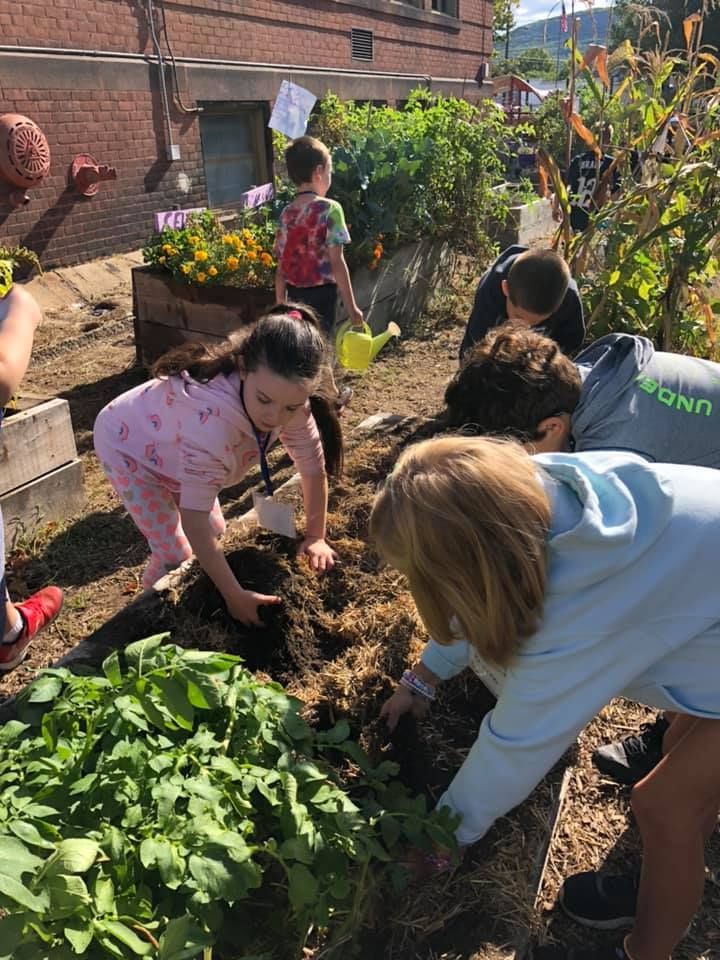
Easthampton Public Schools supports school gardens as an extension of the classroom and a key component of student wellness. School gardens provide hands-on learning opportunities that promote nutrition education, environmental stewardship, and student engagement across grade levels. Through participation in planting, cultivating, and harvesting, students develop a deeper understanding of healthy food choices, sustainable practices, and the connection between food, health, and community.
The district encourages the integration of garden-based learning into core content areas, including science, health, and social studies, and supports partnerships with local organizations to enhance programming. When appropriate, produce grown in school gardens may be incorporated into classroom activities, taste tests, or school meal programs, in accordance with local health and safety guidelines.
School gardens also serve as inclusive spaces that foster collaboration, responsibility, and a sense of belonging among students. The district is committed to maintaining safe, accessible, and well-supported garden spaces that contribute to the overall physical, social, and emotional well-being of all students.
Food and Beverage Marketing
Only foods and beverages that meet Smart Snacks nutrition standards may be marketed or advertised on school campuses during the school day. Marketing includes signage, logos, scoreboards, vending exteriors, posters, educational materials, and other promotional displays.
Equity: Fundraisers
The District recognizes that fundraising activities are part of school culture and community engagement; however, they must align with our commitment to student health, equity, and wellness. All food-based fundraisers held during the school day must meet the federal Smart Snacks in School Standards to ensure that foods sold to students support healthy choices and consistent nutrition messaging.
The District encourages schools, PTOs, and student organizations to consider non-food or wellness-promoting fundraisers whenever possible. Fundraising practices should reflect our core values by ensuring that activities do not disproportionately impact students from economically diverse backgrounds or create inequities in participation. Schools are encouraged to design fundraising efforts that are inclusive, accessible, and supportive of healthy environments for all students.
To learn more about Health School Fundraising:
Equity: Celebrations, Rewards, and Incentives
The District is committed to creating inclusive classroom environments that support student health and belonging. To promote equity, wellness, and consistency across schools, no food items should be brought into the classroom for distribution to the class. This includes birthday celebrations and other personal events.
This practice helps ensure that celebrations do not unintentionally exclude students due to food allergies, medical conditions, cultural or religious dietary restrictions, or family preferences. It also supports the development of healthy relationships with food and reinforces consistent nutrition standards during the school day.
Classroom celebrations should focus on community, recognition, and joy rather than food. Alternatives may include items such as stickers, pencils, bookmarks, extra recess time, a favorite classroom game, read-aloud selections, recognition certificates, or other non-food tokens. Additional ideas are available through the Alliance for a Healthier Generation and the USDA. The District will provide teachers and school staff with a list of alternative celebration and reward ideas to support implementation.
Foods and beverages shall not be used as a reward or withheld as punishment for any reason, including academic performance or behavior. Student motivation and behavior supports should align with evidence-based practices that promote intrinsic motivation, dignity, and positive school climate.
Physical Activity and Physical Education
Physical activity supports cognitive development, emotional regulation, and physical health. All students participate in standards-based physical education aligned with Massachusetts Frameworks. Instruction emphasizes skill development, personal fitness, teamwork, and the development of lifelong healthy habits.
Physical Education shall be taught as a required subject in all grades for all
students (MGL Chapter 71, Section 3). All physical education classes in the District are taught by licensed teachers who are certified or endorsed to teach physical education.
Student's involvement in other activities involving physical activity (e.g., interscholastic or intramural sports) will not be substituted for meeting the physical education requirement.
The District will provide students with physical education, using an age - appropriate, sequential physical education curriculum consistent with the State’s Comprehensive Health Curriculum Framework. All students will be provided equal opportunity to participate in physical education classes. The District will make appropriate
accommodations to allow for equitable participation for all students and will adapt physical education classes and equipment as necessary.
Elementary students are provided regular opportunities for recess. Teachers are encouraged to incorporate movement breaks during instructional time to support engagement and focus.
- Physical activity will not be withheld as punishment, except in rare circumstances related to student safety.
- All physical activity opportunities are inclusive of students with disabilities and responsive to diverse needs.
Social-Emotional and Mental Health
Student wellness includes emotional safety, resilience, and access to mental health supports. The district implements social-emotional learning practices aligned with district priorities and strategic goals. Staff receive professional development in trauma-informed practices and strategies to support student well-being.
Easthampton Public Schools maintains partnerships with community agencies to expand access to mental health services. Prevention and early intervention are prioritized to support students before concerns escalate.
Staff Wellness
Easthampton Public Schools recognizes that staff wellness is essential to a positive school climate and student success. The district shall promote a work environment that supports the physical, mental, and emotional well-being of all employees.
The district shall:
- Promote a respectful, supportive workplace that encourages work-life balance
- Provide access to wellness resources and opportunities for physical activity, as appropriate
- Ensure all staff have access to a confidential Employee Assistance Program (EAP), offering counseling, work/life supports, and wellness resources at no cost
- Encourage healthy food and beverage options at school-based meetings and events
- Maintain safe, clean, and supportive work environments
- Provide opportunities for staff feedback to inform wellness initiatives
All Easthampton Public Schools staff and their immediate family members have access to a confidential Employee Assistance Program (EAP). Through the district’s EAP provider, staff may access counseling services, work/life supports (including legal, financial, and caregiving resources), wellness tools, and professional coaching at no cost. These services are confidential and designed to support employees in addressing personal and professional challenges.
Community Engagement and Wellness Committee
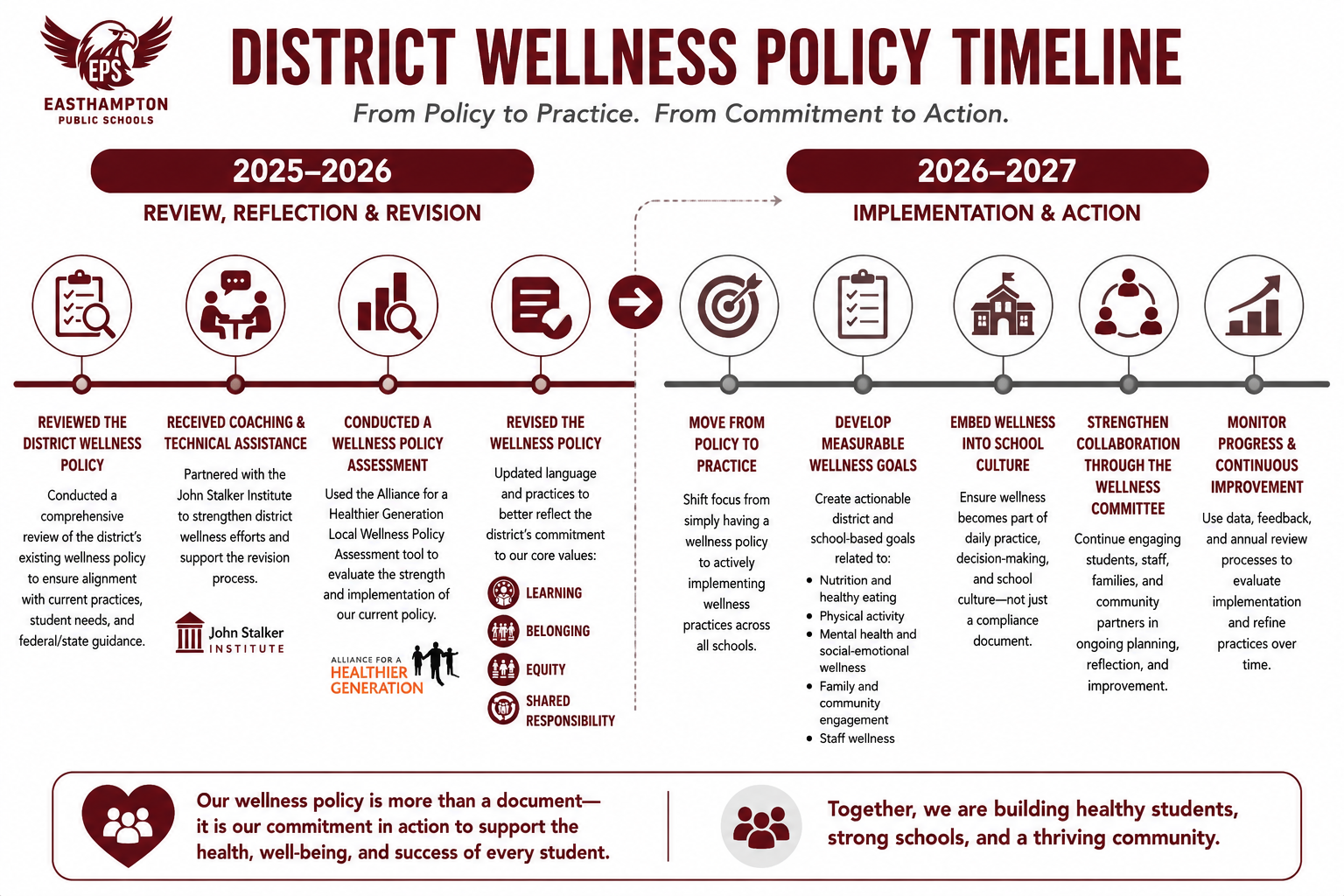
Wellness requires reflection and responsiveness. The district conducts an annual internal review of wellness practices and implementation efforts. In addition, at least once every three years, the district conducts a comprehensive triennial assessment that:
Evaluates compliance with this Local Wellness Policy- Progress made in attaining the goals of the Local Wellness Policy
- Compares the policy to model wellness policies
- Is made publicly available on the district website
Results of the assessment inform revisions and continuous improvement efforts to ensure alignment between policy, practice, and evolving best practices. The review process for the District Wellness Policy will also include an update on policy goals and communication of those goals to the public.
Implementation and Review
The Superintendent or designee will ensure:
- Annual review of wellness practices.
- Periodic assessment of policy implementation.
- Public availability of the wellness policy and progress updates.
- Alignment between policy, school-level practices, and district strategic goals.
Continuous improvement will guide our efforts as we learn from data, community feedback, and evolving best practices.
Commitment
Easthampton Public Schools affirms that wellness is a shared responsibility. Through intentional alignment of policy, practice, and community voice, we will continue to build schools where students are healthy, supported, and ready to lear